

Image Details
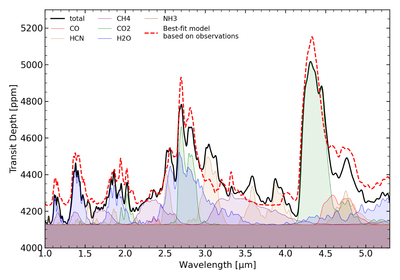
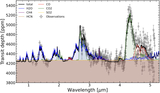
Caption: Figure 8.
Sequencing flare and quiescent conditions together can explain the missing methane at V1298 Tau b. In this case, VULCAN considers a flare frequency of 20%, effective flare temperature of 15,000 K, and a flare size of 0.3% of the stellar surface. The peak methane absorption (purple) near 3.3 microns in the synthetic spectrum (black) matches the best-fit model on observations (dashed red) closer than the previous equilibrium and quiescent photochemical models shown previously. The CO2 absorption also increased in this model compared to the equilibrium chemistry and quiescent photochemistry models, making a better match near the 2.7 and 4.3 micron bands as well.
Other Images in This Article
Show More
Copyright and Terms & Conditions
© 2026. The Author(s). Published by the American Astronomical Society.

