

Image Details
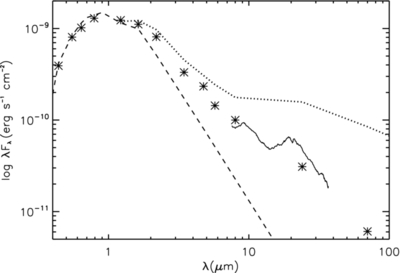
Caption: Figure 9.
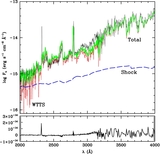
IR spectrum of RECX-11. The IRS spectrum (solid line) and Spitzer photometry (asterisks) show that the IR fluxes are lower than the median IR fluxes of Taurus (dotted line), yet still in excess over the photosphere (dashed line) even in the near-IR. A near-IR excess is due to dust in the inner circumstellar disk, extending all the way to the dust sublimation radius.
Other Images in This Article
Copyright and Terms & Conditions
© 2011. The American Astronomical Society. All rights reserved.

Copyright ©
2026 Astronomy Image Explorer. All Rights Reserved.
