

Image Details
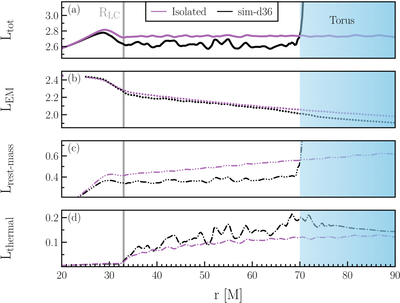
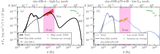
Caption: Figure A1.
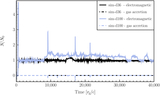
Pulsar wind–disk collision leads to enhanced pulsar wind power dissipation, as seen through a larger value for Lthermal in the presence of a torus located outside RLC (black curves) than for an isolated pulsar (purple curves) in panel (d). We show the total luminosity (a), the electromagnetic luminosity (b), the rest-mass luminosity (c), and the thermal luminosity (d). The black curves correspond to the early phase of the sim-d36 simulation (time-averaged over t ∈ [1000; 2000]rg/c to spatially distinguish the energy content of the torus, and the purple curves correspond to the isolated pulsar case.
Other Images in This Article
Copyright and Terms & Conditions
© 2026. The Author(s). Published by the American Astronomical Society.

Copyright ©
2026 Astronomy Image Explorer. All Rights Reserved.
