

Image Details
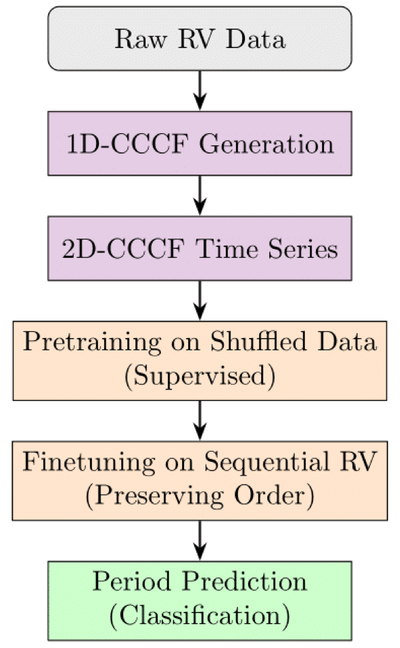
Caption: Figure 9.
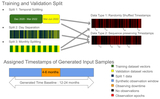
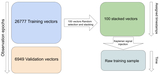
This figure illustrates a schematic workflow of our machine learning pipeline for RV-based period prediction. The process begins with raw RV data, which is transformed into 1D concatenated cross-correlation functions (1D-CCCFs) and further stacked to form 2D concatenated cross-correlation functions (2D-CCCFs) that serve as input representations. Supervised pretraining is performed on temporally shuffled data to enable the model to learn generic Keplerian Doppler shift signatures independent of temporal correlations. This is followed by fine-tuning on sequential RV observations to expose the model to realistic temporal stellar activity patterns. The trained model then performs classification-based coarse prediction of the Keplerian period corresponding to the sought planetary signal.
Other Images in This Article
Show More
Copyright and Terms & Conditions
© 2025. The Author(s). Published by the American Astronomical Society.

