

Image Details
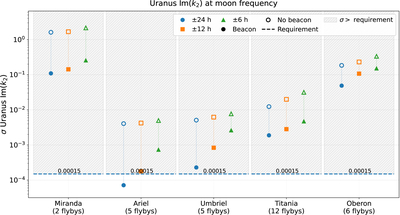
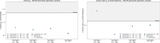
Caption: Figure 12.
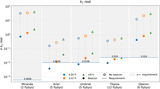
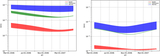
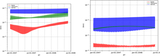
Formal uncertainties on the imaginary part of Uranus’s degree 2 Love number at the forcing frequencies of Miranda, Ariel, Umbriel, Titania, and Oberon. Results are shown for different tracking durations around C/A and for solutions with and without GIRO beacons. The dashed line indicates the adopted reference uncertainty, ﹩{\sigma }_{\mathrm{Im}({k}_{2}),U}^{{\rm{req}}}=1.5\times 1{0}^{-4}﹩, motivated primarily by the Ariel and Miranda paleo-heat-flux argument of F. Nimmo & K. Zahnle (2023). Although this reference level has its strongest physical motivation at the Ariel-related forcing frequency, it is also shown for the other moon frequencies because the joint moon k2–Uranus dissipation optimization uses the same value as a common normalization scale. The hatched region denotes solutions above this operational sensitivity level.
Other Images in This Article
Show More
Copyright and Terms & Conditions
© 2026. The Author(s). Published by the American Astronomical Society.

