

Image Details
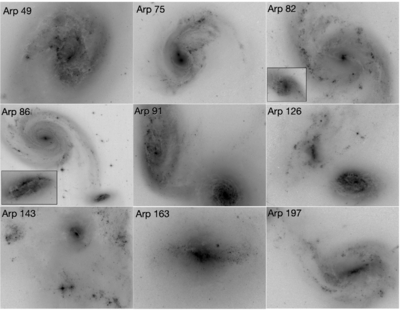
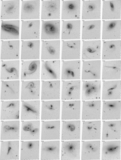
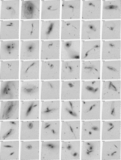
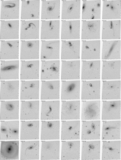
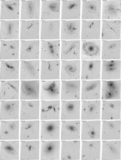
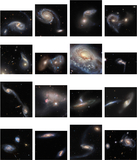
Caption: Figure 11.
(a) Zoom-in views from the atlas images (Appendix B) of systems with notably bright point-source populations with high surface density (given their distance) and large numbers of stars above the background. The selection favors systems with very recent and/or high-intensity star formation. FOVs are chosen to highlight areas with the most intense star formation; insets are added when multiple members of the system show evidence for prominent bright star or cluster formation. Systems are ordered by catalog number, and those shown here include Arp 49; Arp 75; Arp 82; Arp 86; Arp 91; Arp 126; Arp 143; Arp 163; and Arp 197. (b) Zoom-in views from the atlas images (Appendix B) of systems with notably bright point-source populations with high surface density (given their distance) and large numbers of stars above the background. The selection favors systems with very recent and/or high-intensity star formation. FOVs are chosen to highlight areas with the most intense star formation; insets are added when multiple members of the system show evidence for prominent bright star or cluster formation. Systems are ordered by catalog number, and those shown here include Arp 202; Arp 208; Arp 216; Arp 245; Arp 248; Arp 278; Arp 283; Arp 301; and Arp 314. (c) Zoom-in views from the atlas images (Appendix B) of systems with notably bright point-source populations with high surface density (given their distance) and large numbers of stars above the background. The selection favors systems with very recent and/or high-intensity star formation. FOVs are chosen to highlight areas with the most intense star formation; insets are added when multiple members of the system show evidence for prominent bright star or cluster formation. Systems are ordered by catalog number, and those shown here include Arp 321; AM0001-505; AM0018-485; AM0135-650; AM0144-585; AM0223-403; AM0313-545; AM0459-340; and AM0558-335. (d) Zoom-in views from the atlas images (Appendix B) of systems with notably bright point-source populations with high surface density (given their distance) and large numbers of stars above the background. The selection favors systems with very recent and/or high-intensity star formation. FOVs are chosen to highlight areas with the most intense star formation; insets are added when multiple members of the system show evidence for prominent bright star or cluster formation. Systems are ordered by catalog number, and those shown here include AM1200-251; AM1200-251; AM1356-332; AM1957-471; AM2029-544; AM2106-374; AM2224-310; AM2303-305; AM2350-410.
Other Images in This Article
Show More
Copyright and Terms & Conditions
© 2026. The Author(s). Published by the American Astronomical Society.

